
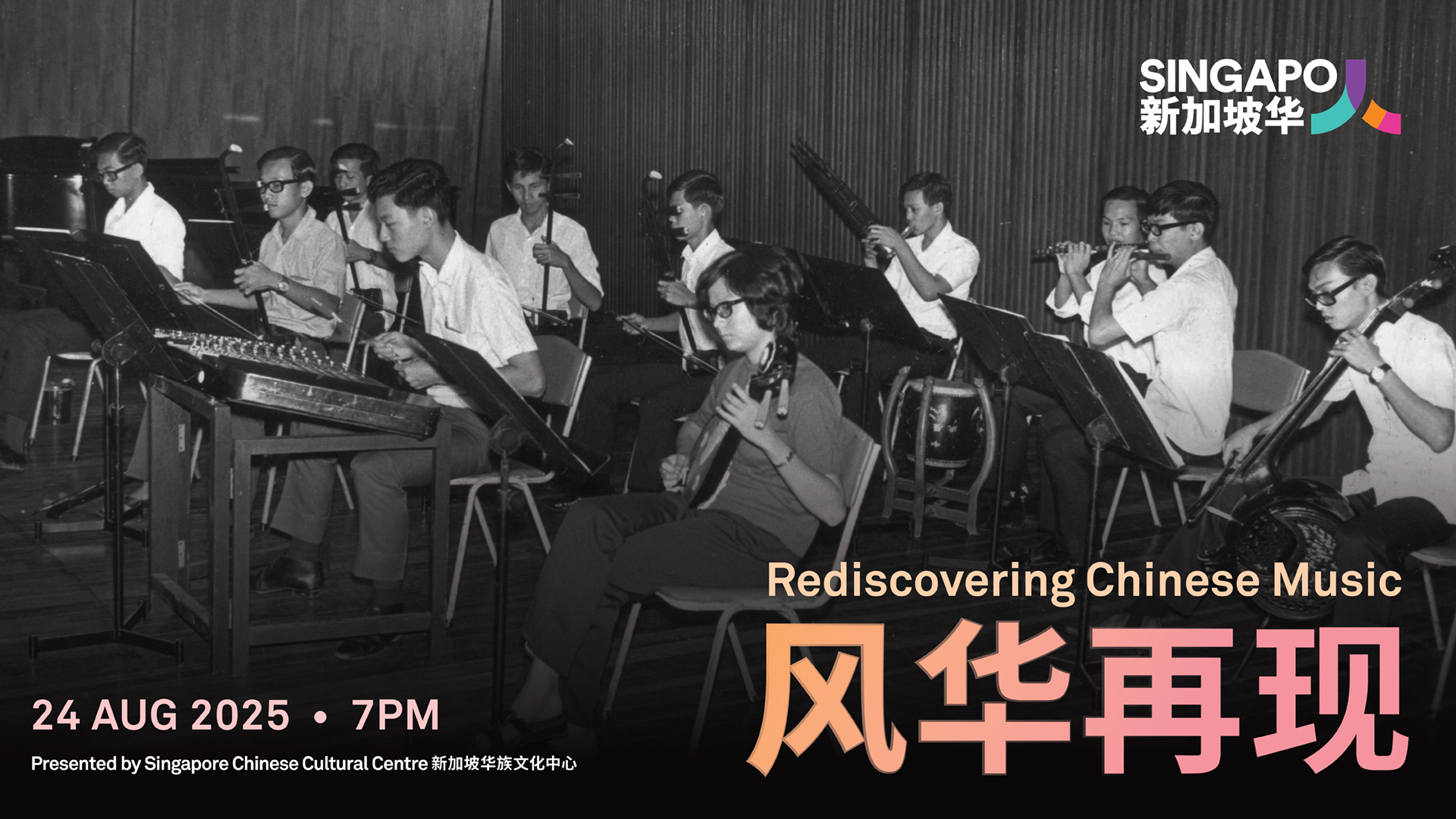
As part of SG60 celebrations, Singapore Chinese Cultural Centre (SCCC) presents the Rediscovering Chinese Music concert, which pays tribute to the early pioneers who overcame challenges and laid a strong foundation for the evolution of the Chinese music scene in Singapore between 1950s and 1970s.
Curated by Phoon Yew Tien, conducted by Mike Chiang and performed by Chang Chun Chinese Orchestra, this concert seeks to rekindle the spirit of perseverance and dedication shown by these pioneers by recreating the artistic essence of the early days of Chinese orchestral concerts with ensemble pieces, instrumental solos, and vocal performances.
Through a concert repertoire comprising distinctive musical works widely recognized within the local Chinese music community during these three decades, audiences will be able to experience the historical and cultural significance as well as the evolution of Singapore’s rich Chinese music heritage.
About Chang Chun Chinese Orchestra
Chang Chun Chinese Orchestra is a unique, independent ensemble that brings together three generations of Chinese music practitioners to showcase the vibrant continuity of Chinese music traditions in this region. Its members include musicians from the 1970s iteration of Chang Chun Chinese Orchestra, such as Tng Kin Seng and Choo Boon Chong, both of whom have served as principal or associate principal players with Hong Kong Chinese Orchestra, current and former members of Singapore Chinese Orchestra, such as Qu Jian Qing, Ng Seng Hong, Ng Boon Chai, Mike Chiang, Liu Zhiyue, Xu Zhi Peng, Vincent Tan, and Ong Yihorng, as well as a new generation of outstanding young musicians.
Ticketing Prices and Promotions:
*Subscribe to SCCC EDM at www.singaporeccc.org.sg or singaporen.sg
Concert Programme:
Composed by Liu Mingyuan and transcribed by Phoon Yew Tien.
As its title suggests, this piece radiates festive joy. Commonly known in China as Xiyangyang (“Beaming with Joy”), many local recordings and reprints retained the nostalgic and endearing title, Xiqi Yangyang (“Joyous Celebration”). This version is based on a 1960s transcription from the Art Sound and China Records editions.
Transcribed by Phoon Yew Tien.
This representative small ensemble work from the 1950s–60s beautifully embodies the lyrical, flowing qualities of Chinese instrumental music and evokes the tranquil and poetic landscapes of Guilin. First appearing in recordings in the 1960s, its composer and original performers remain unknown.
Transcribed by Phoon Yew Tien.
This piece appeared alongside Scenery of Guilin on the same China/Art Sound vinyl record. Its gentle triple meter suggests the undulating motion of fishing boats drifting on rivers and lakes, with the melody faintly echoing distant fishermen’s songs.
Transcribed by Phoon Yew Tien.
Dizi by Choo Boon Chong, and yangqin accompaniment by Qu Jianqing.
Adapted from a Jiangnan sizhu piece of the same name, the melody is refined and elegant, capturing the misty, poetic charm of the Jiangnan region. This piece was widely played in Singapore’s Chinese music circles during the 1970s.
Adapted by Phoon Yew Tien.
Soprano: He Miya
This is a Xinjiang folk song often heard in Singapore during the 1970s. Originally accompanied by piano, it is now arranged for a Chinese chamber ensemble and its music imparts a bright and lively character.
Lyrics by Wang Jiyou, music by Yu Lin, and arrangement by Phoon Yew Tien.
Sung in Cantonese, this song was popularised in Singapore during a 1960s performance tour by the Hong Kong Silver Star Art Troupe. Expressing a deep longing for a distant loved one, the song is divided into three sections and is noted for its graceful, touching melody.
Arranged by Phoon Yew Tien.
Pipa by Huang Hairong.
This piece was among the broadcast repertoire of People’s Association Chinese Orchestra in the late 1970s. Based on the Cantonese opera tune, Zhaojun’s Lament, it vividly depicts the sorrow and solitude of Wang Zhaojun as she leaves the Han court to marry beyond the frontier. The piece consists of a prelude, moderate section, and a fast section.
Intermission
Arranged by Phoon Yew Tien.
This was originally a song from the 1970s North Korean film The Maiden of Mount Kumgang. Structured in three sections – fast, moderate, and fast again – it combines spirited and lyrical elements.
Transcribed by Phoon Yew Tien.
This piece resembles Flowers in Bloom composed by Deng Guisheng and was popular in Singapore’s Chinese music circles. Unlike Flowers in Bloom, this medium-paced 4/4 piece features more melodic twists and turns, making it particularly captivating.
Composed by Lei Zhenbang and arranged by Phoon Yew Tien
From the 1960s film Liu Sanjie, this was a favorite broadcast piece of People’s Association Chinese Orchestra in the late 1970s. It seeks to portray tea-picking maidens joyfully climbing the hills through its bright and lively melodies.
Transcribed by Phoon Yew Tien.
Gaohu by Liu Zhile, and guzheng by Indra.
Originally a traditional zheng piece, this version is based on 1960s recordings by Yang Yinliu and Yao Yide. The work has three sections: a tranquil prelude depicting fishermen at leisure among rivers and mountains, a moderate section, and a lively finale evoking returning boats at sunset.
Music by Tong Fu, lyrics by Haimer and arrangement by Phoon Yew Tien
Soprano: He Miya
Tenor: Zhuang Jie
From the 1953 Chinese film, The People on the Grassland, this song expresses the innocence and yearning for love among the people of the grasslands.
Music by Ji Ming, lyrics by Sun Qian and arrangement by Phoon Yew Tien
Soprano: He Miya
Tenor: Zhuang Jie
From the 1957 Chinese film, Who Is the Abandoned One, this song embodies the pure and heartfelt view of love held by that generation.
Composed by He Bin and others, and arranged by Phoon Yew Tien.
The piece vividly contrasts the gentle, flowing movements of taichi with the vigorous, forceful energy of the martial arts movement, Fast Fist.
Originally titled Dance of the Yao People, this orchestral work was composed by Liu Tieshan and Mao Yuan between 1951 and 1952, and later adapted into a large-scale Chinese orchestral piece by Peng Xiuwen. It depicts the festive singing and dancing of the Yao people during celebrations.
Aug 24, 2025
7pm – 9pm
SCCC Auditorium, Level 9
$20 (includes GST and SISTIC booking fee)
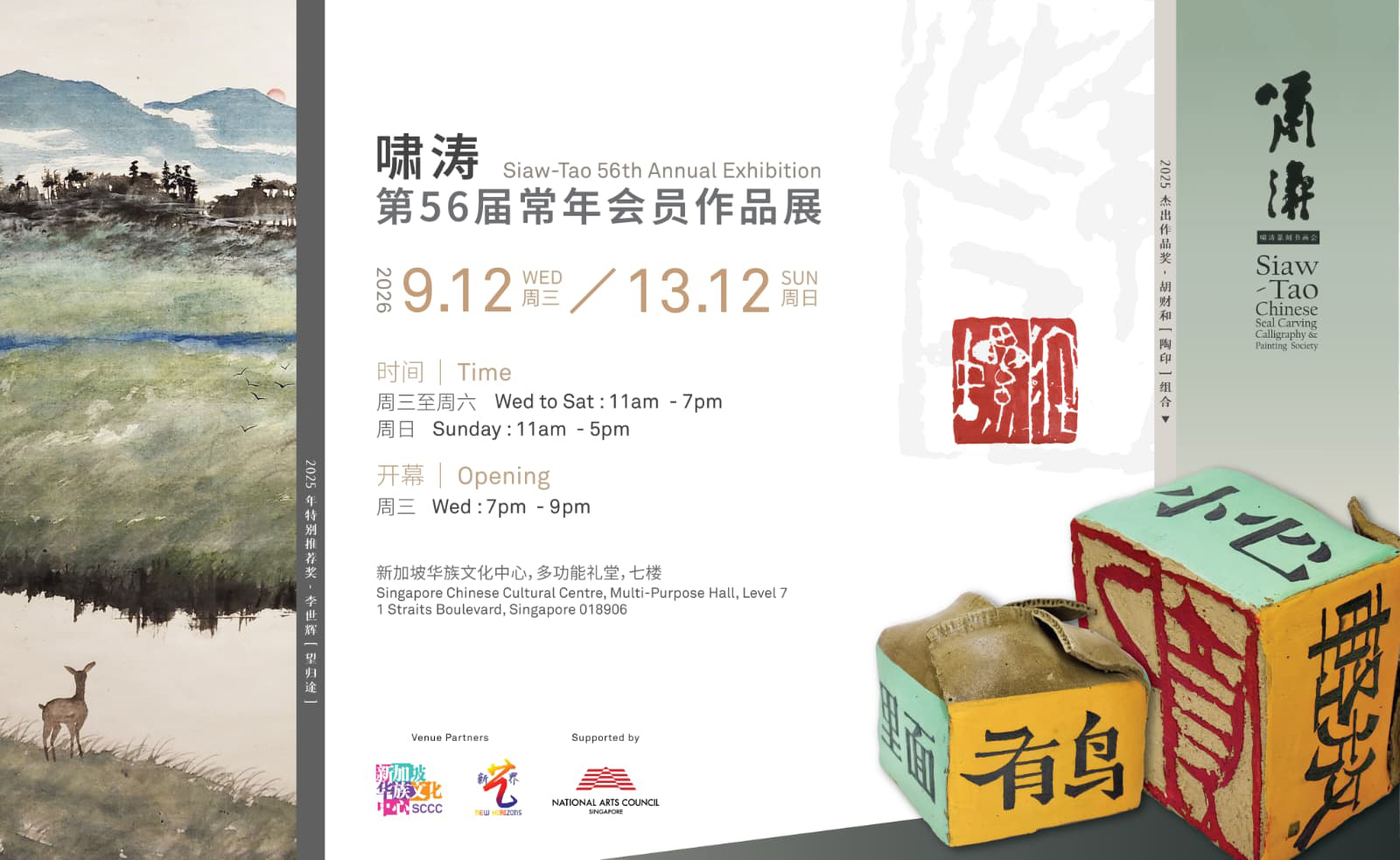
The 56th Anniversary Exhibition of Siaw-Tao Seal Carving, Calligraphy and Painting Society is a showcase…
 Free
Free
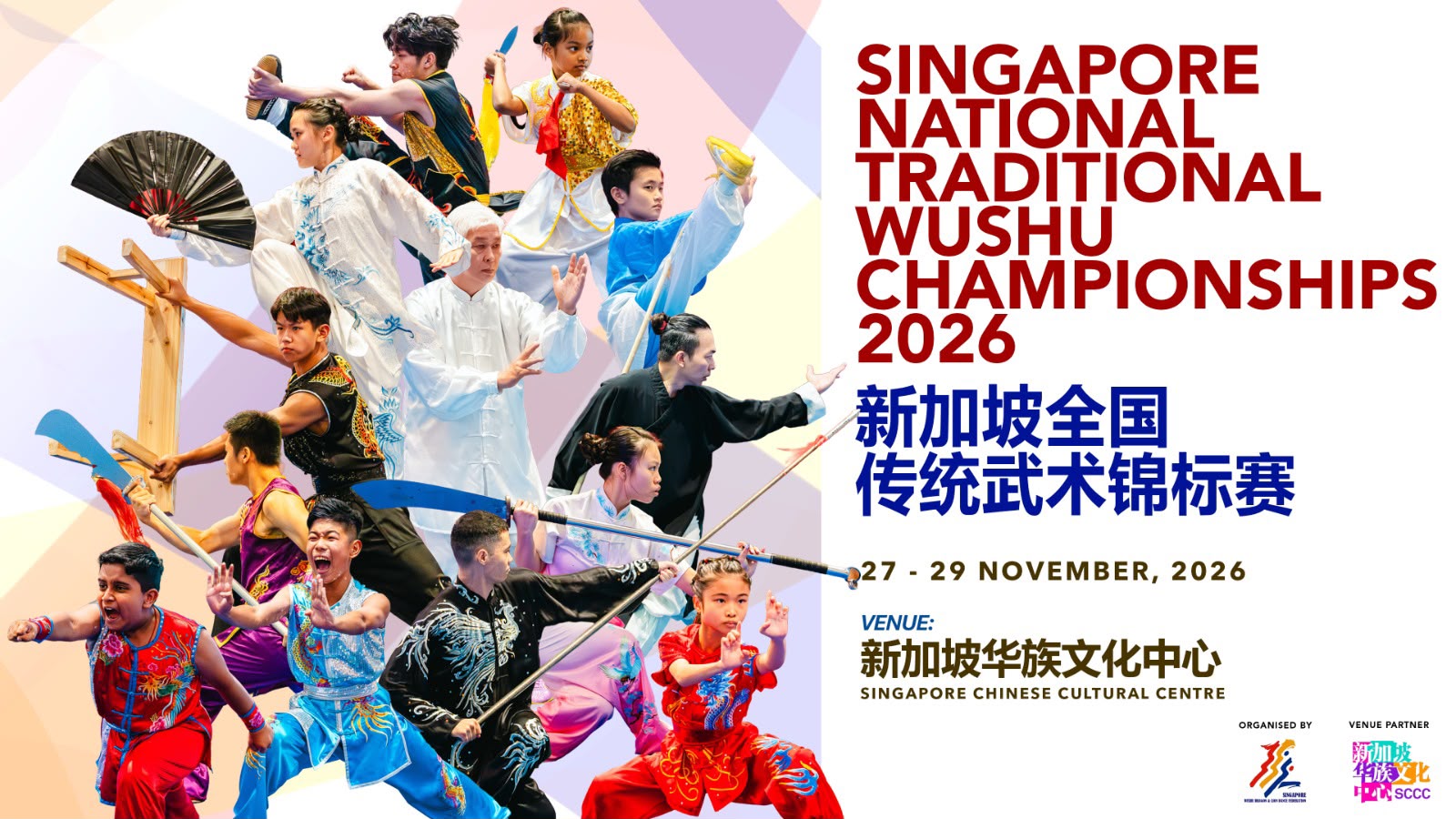
The Singapore National Traditional Wushu Championships, organised annually by the Singapore Wushu Dragon & Lion…
Free
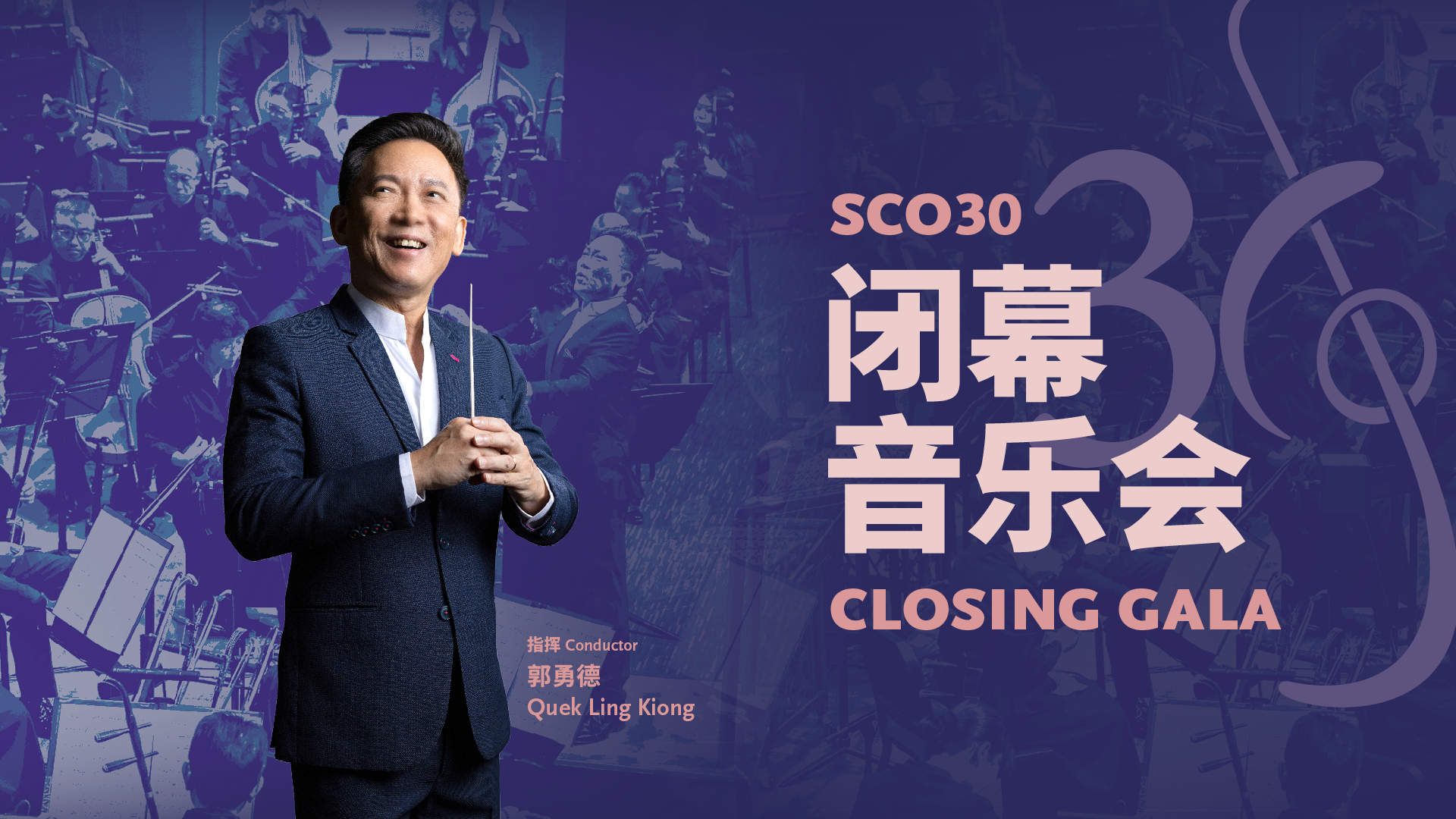
The SCO30 celebration series culminates in a magnificent grand finale concert that weaves together the…